
Unsafe Driving BASIC: Preventing Violations and Strengthening Fleet Safety

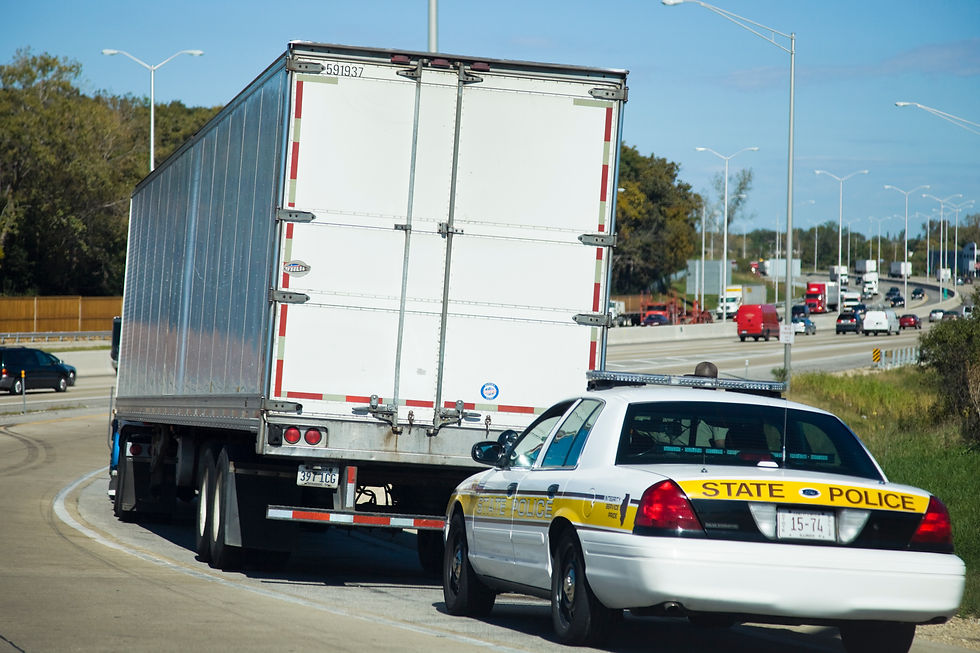
Unsafe driving behaviors are among the most visible - and most heavily scrutinized - risks in the trucking industry. Under the FMCSA’s Compliance, Safety, and Accountability (CSA) program, the Unsafe Driving BASIC evaluates how safely drivers operate commercial motor vehicles on the road.
As we continue our series exploring the BASICs, this article focuses on how safety managers and fleet leadership can work proactively with drivers to prevent unsafe driving violations, while also covering how DataQs challenges can be used to address incorrect violations.
📊 What Is the Unsafe Driving BASIC?
The Unsafe Driving BASIC measures violations related to dangerous or reckless driving behaviors. These violations are typically observed during roadside inspections or issued as traffic citations.
Common violations include:
Speeding (any range above the posted limit)
Reckless or careless driving
Following too closely
Improper lane changes
Failure to obey traffic control devices
Using a handheld mobile device while driving
These violations are recorded in the FMCSA’s Safety Measurement System (SMS), maintained by the Federal Motor Carrier Safety Administration (FMCSA), and are assigned high severity weights due to their direct link to crash risk.
⚠️ Why the Unsafe Driving BASIC Matters
Unsafe driving violations have an immediate and lasting impact on a carrier’s safety profile. Poor performance in this BASIC can result in:
Higher CSA scores and increased enforcement attention
More frequent roadside inspections
Increased insurance premiums
Loss of business opportunities with brokers and shippers
Greater liability exposure in the event of accidents
Because these violations are tied directly to driver behavior, they are both high-risk and highly preventable.
🚔 Most Common Unsafe Driving Violations
Law enforcement agencies consistently report similar patterns when it comes to unsafe driving violations. The most common include:
Speeding violations, including excessive speeding
Following too closely, especially in heavy traffic
Improper lane usage or unsafe lane changes
Distracted driving, including handheld device use
Failure to yield or obey traffic signals
These behaviors significantly increase the likelihood of crashes and are therefore closely monitored and heavily weighted in the CSA system.
🧠 How Safety Managers Can Prevent Unsafe Driving Violations
Preventing unsafe driving starts with leadership. Safety managers and fleet operators play a critical role in shaping driver behavior through training, monitoring, and accountability.
Establish Clear Safety Policies
Create and enforce written policies that clearly define acceptable driving behavior, including speed limits, following distance, and distracted driving rules.
Provide Ongoing Driver Training
Regular training should focus on:
Defensive driving techniques
Speed management
Hazard awareness
Fatigue and distraction prevention
Training should not be a one-time event - it must be continuous and reinforced.
Use Telematics and Monitoring Systems
Technology such as GPS tracking, dashcams, and telematics can identify:
Speeding patterns
Harsh braking or acceleration
Unsafe following distances
This data allows fleets to correct behavior before violations occur.
Implement Coaching and Feedback Programs
Drivers should receive regular performance feedback based on real data. Positive reinforcement and corrective coaching both play a role in improving behavior.
Promote a Safety-First Culture
Drivers should feel supported when making safe decisions - even if it means delaying a delivery. Removing pressure to rush is critical to reducing unsafe driving.
🏢 Fleet-Level Strategies to Reduce Risk
In addition to driver-focused efforts, fleet leadership should:
Review CSA data regularly to identify trends
Address repeat violations immediately
Align dispatch schedules with realistic transit times
Incorporate safety metrics into driver evaluations
💡 Pro Tip: Unsafe driving violations often increase when drivers feel rushed or pressured - operational planning matters.
⚖️ Using DataQs to Challenge Unsafe Driving Violations
Not all violations are recorded accurately. The FMCSA’s DataQs system allows carriers to request a review of potentially incorrect inspection or violation data.
When to Use DataQs:
The violation was issued in error
The driver or vehicle was incorrectly identified
Supporting evidence contradicts the citation
A citation was dismissed in court
What You Need:
Clear supporting documentation, such as court records, dashcam footage, or inspection reports
A detailed explanation of why the violation is incorrect
Important Considerations:
Not all challenges result in removal
The burden of proof is on the carrier
Timely submission improves your chances of success
💡 Key takeaway: DataQs is a valuable tool, but it works best when backed by strong evidence and proper documentation.
🚫 Preventing Repeat Violations
To reduce repeat unsafe driving violations:
Track driver-specific trends and intervene early
Retrain drivers after any violation
Set clear consequences for repeated unsafe behavior
Recognize and reward safe driving performance
Consistency is key - safety expectations must be applied across the entire fleet.
✅ Final Thoughts
The Unsafe Driving BASIC is one of the most important indicators of real-world risk. Unlike some compliance areas, it reflects how drivers behave on the road every day.
Strong performance requires a combination of driver training, leadership involvement, technology, and accountability. Carriers that take a proactive approach not only reduce violations but also build safer, more reliable operations.
At U Trust Insurance, we help trucking companies understand how unsafe driving behavior impacts CSA scores, insurance costs, and long-term business success.
🚛 Safe driving is not just compliance - it’s your strongest competitive advantage.


